
Introduction
If you’ve searched for “Where to buy a reliable hardness tester near me?”, you’re probably looking for more than just a product—you need a trusted supplier who can provide accurate instruments, technical support, calibration, and long-term service.
A hardness tester is an essential quality control instrument used to determine the hardness of metallic materials without causing significant damage to the component. Whether you’re working in steel manufacturing, automotive production, aerospace, railways, foundries, heat treatment, fabrication, or heavy engineering, selecting the right hardness tester can directly impact product quality and inspection efficiency.
This guide explains everything you need to know before purchasing a hardness tester, including different testing technologies, key buying factors, common mistakes to avoid, and why choosing the right manufacturer makes a significant difference.
What is a Portable Hardness Tester?
A portable hardness tester is a non-destructive testing (NDT) instrument that measures the hardness of metals and alloys directly on the workpiece. Unlike bench-top hardness testing machines, portable models allow inspectors to perform measurements on-site without removing heavy or installed components.
Portable hardness testers are commonly used for:
- Steel plants
- Foundries
- Automotive manufacturing
- Railway maintenance
- Aerospace components
- Oil & Gas industries
- Power plants
- Heavy fabrication
- Heat treatment facilities
- Quality control laboratories
Because they are lightweight and portable, these instruments reduce inspection time while maintaining high measurement accuracy.
Why Buying from a Reliable Supplier Matters
Many buyers compare products only by price. However, the actual value of a hardness tester depends on much more than its initial cost.
A reliable supplier provides:
- Genuine products
- Factory calibration
- Warranty support
- Technical assistance
- Spare parts availability
- Software updates
- Operator training
- Fast service response
- Long-term product support
These factors reduce downtime and improve the overall return on investment.
Types of Portable Hardness Testers
1. Leeb Hardness Tester
Leeb hardness testers use the rebound principle. A spring-loaded impact device strikes the test surface, and the rebound velocity is measured to calculate hardness.
Best for:
- Heavy components
- Large forgings
- Castings
- Steel structures
- Pressure vessels
- Large shafts
Advantages:
- Fast measurements
- Easy operation
- Suitable for field inspections
- Excellent for large workpieces
2. Ultrasonic Hardness Tester (UCI)
Ultrasonic Contact Impedance (UCI) technology measures hardness by analyzing changes in ultrasonic frequency during indentation.
Ideal for:
- Thin materials
- Small components
- Weld inspections
- Heat-treated surfaces
- Gear teeth
- Complex geometries
Advantages:
- Very high precision
- Minimal indentation
- Excellent for finished surfaces
- Suitable for small parts
3. Universal Hardness Tester
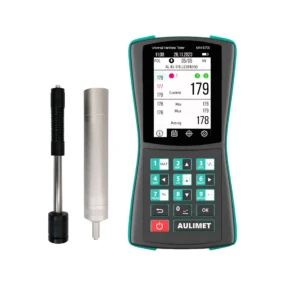
A universal hardness tester combines both Leeb and UCI technologies into a single instrument.
Benefits include:
- Maximum flexibility
- Suitable for almost every application
- Reduced equipment cost
- Better measurement capability
- Higher productivity
Dual-technology instruments are becoming the preferred choice for industries that inspect different types of components. The MR-HD700 combines both Leeb and UCI measurement methods in one portable device, providing flexibility for field and laboratory inspections.
How to Choose a Reliable Hardness Tester
Before purchasing, consider the following factors.
Measurement Accuracy
Choose an instrument that complies with internationally recognized standards and provides repeatable results.
Supported Hardness Scales
The instrument should support multiple scales, including:
- HRC
- HRB
- HB
- HV
- HL
- HS
This eliminates the need for multiple testing instruments.
Material Compatibility
A quality hardness tester should accurately measure:
- Carbon steel
- Stainless steel
- Tool steel
- Cast iron
- Aluminum
- Brass
- Bronze
- Copper
- Heat-treated materials
Display
A bright color display improves readability in both workshop and outdoor environments.
Data Storage
Modern hardness testers should provide:
- Large internal memory
- Date and time stamping
- Statistical analysis
- USB data transfer
- Report generation
Rugged Construction
Industrial environments demand:
- Dust-resistant housing
- Shock protection
- Long battery life
- Reliable performance under demanding conditions
Questions to Ask Before Buying
Before placing an order, ask the supplier:
- Does the instrument include a calibration certificate?
- What warranty is provided?
- Are spare probes available?
- Is operator training included?
- Can reports be generated?
- Which hardness scales are supported?
- What materials can be tested?
- Is technical support available after purchase?
A professional supplier should answer all these questions confidently.
Common Mistakes Buyers Make
Many organizations make purchasing decisions based only on the lowest quotation.
Avoid these mistakes:
- Choosing the cheapest instrument
- Ignoring calibration requirements
- Buying from unauthorized dealers
- Not checking after-sales support
- Purchasing the wrong testing technology
- Overlooking spare parts availability
Selecting the correct instrument from the beginning helps avoid unnecessary maintenance costs and inspection delays.
Online vs Local Dealer
Many buyers wonder whether they should purchase online or from a nearby supplier.
Buying directly from a manufacturer generally offers several advantages:
- Genuine products
- Factory pricing
- Better warranty support
- Technical expertise
- Software updates
- Faster spare parts
- Product training
An experienced manufacturer also understands industrial applications and can recommend the right solution based on your inspection requirements.
Industries That Use Portable Hardness Testers
Portable hardness testers are widely used in:
Steel Plants
Checking billets, plates, pipes, forgings, and finished products.
Automotive Industry
Inspecting gears, shafts, crankshafts, engine components, and heat-treated parts.
Railways
Testing rails, wheels, axles, couplers, and welded components.
Aerospace
Measuring lightweight alloys and precision-machined components.
Oil & Gas
Inspecting pressure vessels, pipelines, valves, and structural components.
Heat Treatment Facilities
Verifying hardness after heat treatment processes.
Features to Look For
When comparing different models, prioritize instruments that offer:
- Dual testing technology
- Large color display
- USB connectivity
- Statistical calculations
- Multiple hardness scales
- User calibration
- Long battery life
- Lightweight design
- Rugged housing
- Report generation
Why More Industries Are Choosing Universal Hardness Testers
Traditional hardness testers often specialize in only one testing method.
Modern manufacturing requires inspection of:
- Large castings
- Small precision parts
- Thin materials
- Welds
- Heat-treated surfaces
- Installed machinery
Using separate Leeb and UCI instruments increases costs.
Universal hardness testers solve this challenge by combining both technologies into a single portable device, making them suitable for a wider range of industrial applications.
Recommended Solution: AULIMET MR-HD700 Universal Portable Hardness Tester
For organizations looking for a versatile solution, the AULIMET MR-HD700 Universal Portable Hardness Tester is designed to deliver accurate, repeatable, and reliable hardness measurements across a wide range of industrial applications.
The instrument combines both Leeb and Ultrasonic Contact Impedance (UCI) technologies in one portable device, allowing users to inspect everything from large forgings to thin precision components.
Key highlights include:
- Dual Leeb + UCI technology
- Multiple hardness scales
- Large color display
- Data storage and statistical analysis
- USB connectivity
- Rugged portable design
- User-friendly operation
- Suitable for workshops and field inspections
- Fast and repeatable measurements
- Support for a wide variety of metallic materials
Learn more about the product here:
AULIMET Portable Hardness Tester MR-HD700
Buying Checklist
Before purchasing a hardness tester, ensure it includes:
✔ Calibration certificate
✔ Warranty
✔ Technical support
✔ Operator training
✔ Multiple hardness scales
✔ Data storage
✔ USB connectivity
✔ Spare probe availability
✔ Service support
✔ Software updates
Frequently Asked Questions
Which hardness tester is best for steel?
Both Leeb and UCI hardness testers are suitable for steel, depending on component size and surface condition.
Can portable hardness testers replace laboratory machines?
For many field and production applications, modern portable hardness testers provide highly reliable measurements while eliminating the need to move heavy workpieces.
How often should a hardness tester be calibrated?
Calibration intervals depend on usage and internal quality procedures, but annual calibration is generally recommended.
Can a portable hardness tester test welds?
Yes. UCI technology is particularly suitable for welds, heat-affected zones, and thin materials.
Which industries use portable hardness testers?
Steel, automotive, aerospace, railways, foundries, oil & gas, power generation, heavy engineering, and quality control laboratories.
Conclusion
Finding a reliable hardness tester is about more than choosing the lowest price. A dependable supplier should provide accurate instruments, calibration support, technical guidance, warranty coverage, and responsive after-sales service.
Whether you are inspecting large steel structures, precision components, welded joints, or heat-treated parts, selecting the appropriate hardness testing technology will improve inspection efficiency and confidence in your quality control process.
If you are looking for a universal portable hardness tester that combines Leeb and UCI technologies in one rugged instrument, explore the AULIMET MR-HD700 Universal Portable Hardness Tester and discover how it can simplify hardness testing across a wide range of industrial applications.
👉 Product Page:
https://aulimet.com/non-destructive-testing-instruments/portable-hardness-testers/portable-hardness-tester-mr-hd700/